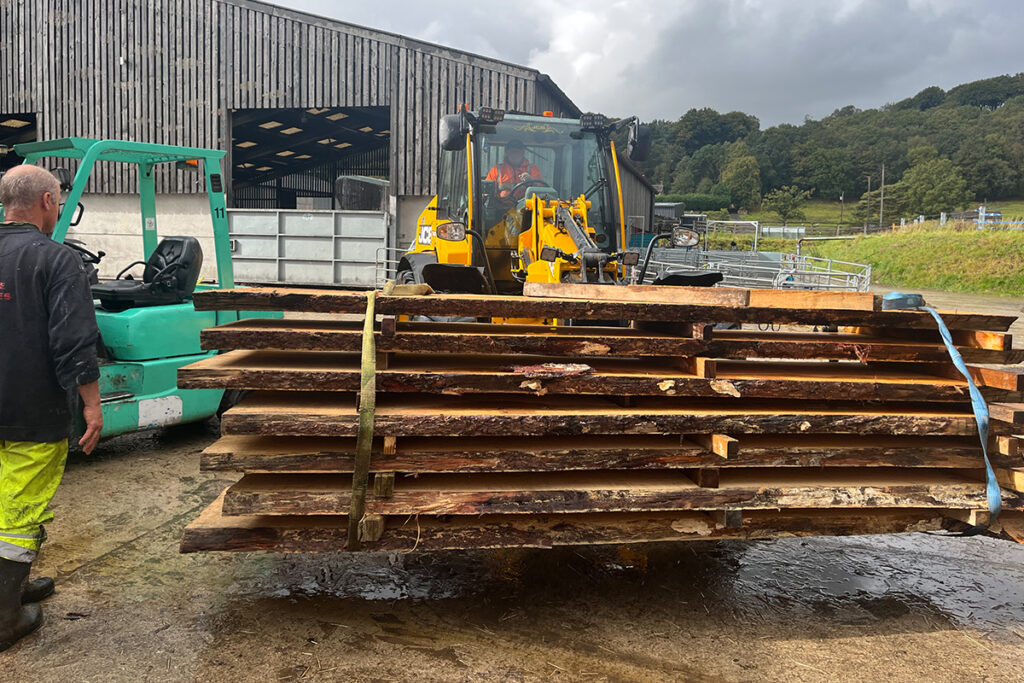
When a tree is felled, the work doesn’t necessarily end when it hits the ground. For tree surgeons, landowners and estate managers, dealing with the timber left behind can be one of the most challenging parts of the job. Large logs, heavy branches and substantial volumes of timber all need to be managed, often requiring additional equipment, transport and time.
At Treecycle 2020, we work with tree surgeons, landowners and estate managers to help them make more of their felled timber through portable sawmilling and bespoke timber cutting. Rather than automatically treating felled trees as waste, it’s worth considering the options available.
For professional tree surgeons, removing or reducing a tree is only part of the process. Once the work is complete, there may still be large sections of trunk, branches and other material to deal with. Depending on the location, size and condition of the timber, clearance can present several challenges.
Large logs can be difficult to move, particularly where access is restricted or specialist lifting equipment is required. Removing timber from a site can involve additional journeys, equipment and associated costs. Managing timber can take valuable time away from other work, particularly when dealing with large trees or multiple sites.
Not every log is suitable for milling, but some may have considerably more potential than initially expected. For tree surgeons and landowners, understanding what can be recovered and reused can help inform how timber is managed after felling.
Does felled timber have any value?
The short answer is that it can. The potential value of a felled tree depends on several factors, including its species, size, condition and intended use. A large, straight section of trunk may be suitable for producing boards, beams or slabs, while smaller or irregular sections could have other practical applications.
Depending on the timber, possible uses include:
- Boards and planks for woodworking
- Beams for suitable building projects
- Timber cladding
- Fencing and gates
- Garden furniture and benches
- Landscaping features
- Bespoke furniture and joinery
The important thing is recognising that timber doesn’t automatically become waste simply because a tree has been removed. In some cases, it could provide a useful resource for the landowner or another customer.
One of the biggest challenges with felled timber is moving it. Large logs can be extremely heavy, and transporting them to a traditional sawmill may not always be practical or economical. This is where portable sawmilling can offer an alternative.
Rather than moving the logs to the sawmill, Treecycle brings the sawmill directly to the site, subject to suitable access and working conditions. We can then mill suitable timber into boards, beams, slabs or other dimensions based on the customer’s requirements. For landowners and estate managers, this creates an opportunity to retain timber from their own trees and use it for future projects. For tree surgeons, it provides another option to discuss with customers when planning how felled timber will be managed.
The benefits of on-site timber milling
Portable sawmilling can offer several practical advantages:
Reduced transportation – Processing logs where they have been felled can reduce the need to transport heavy, unprocessed timber over long distances.
Better use of resources – Suitable timber can be transformed into materials with a practical purpose rather than automatically being removed or chipped.
Flexibility – Timber can be milled to dimensions that suit the intended project, where the log and equipment allow.
Opportunities for reuse – Landowners can retain timber for repairs, landscaping, fencing, buildings or other projects around their property.
Making use of existing timber can help reduce avoidable waste and the need to purchase additional materials. Of course, freshly milled timber may require appropriate drying, storage or further processing before it can be used. Tree surgeons play an important role in helping customers understand what happens to a tree after it has been felled.
For many homeowners and landowners, the assumption is that the timber will simply be removed from the site, but there may be other options worth discussing. For example, a customer having a mature tree removed might be interested in retaining some of the timber to create a garden bench, table or other feature.
An estate manager might want to use timber from planned woodland work for fencing, gates or maintenance projects. A landowner could have several felled trees that may be suitable for milling into usable boards. By considering these possibilities before work begins, tree surgeons can help customers make more informed decisions about their timber. It’s also worth discussing potential milling requirements before the tree is cut into smaller sections, as log length and condition can affect what can be recovered.
If you know trees are due to be felled, it’s worth thinking about what will happen to the timber before work begins. A few simple considerations can make a difference, such as:
1. Identify the timber
Knowing the species, approximate diameter and condition of the tree can help establish whether milling may be worthwhile.
2. Consider the intended use
If the timber is being retained for a particular project, the required dimensions may influence how the trunk should be cut.
3. Think about access
Portable sawmilling requires suitable access and enough space to operate safely.
4. Plan for storage
Freshly milled timber often needs to be stacked and dried appropriately before use.
5. Speak to a sawmilling specialist
Getting advice before the timber is removed or cut into short lengths can help avoid missed opportunities. Not every tree will be suitable for milling, but understanding the options early can save unnecessary work later.
A more practical approach to timber management
As more landowners and businesses look for ways to reduce waste and make better use of resources, the way we manage felled timber deserves greater consideration. For Treecycle, the focus has always been on recognising the potential in locally grown timber.
Through portable sawmilling and bespoke timber cutting, we help customers turn suitable logs into useful materials for a wide range of projects, and with new developments planned for Treecycle, we’re continuing to explore ways to make timber management more practical for the people dealing with it every day.
Got felled timber? Let’s talk
Whether you’re a tree surgeon managing timber across multiple sites, a landowner dealing with fallen trees or an estate manager planning woodland work, Treecycle can help you explore the options available.
Before you arrange for your timber to be removed, why not find out whether it could be put to better use? Contact Keith to discuss your requirements.
Call: 07712 880774
Email: keith@treecycle2020.co.uk
Website: www.treecycle2020.co.uk
Treecycle 2020 – Giving timber another purpose.