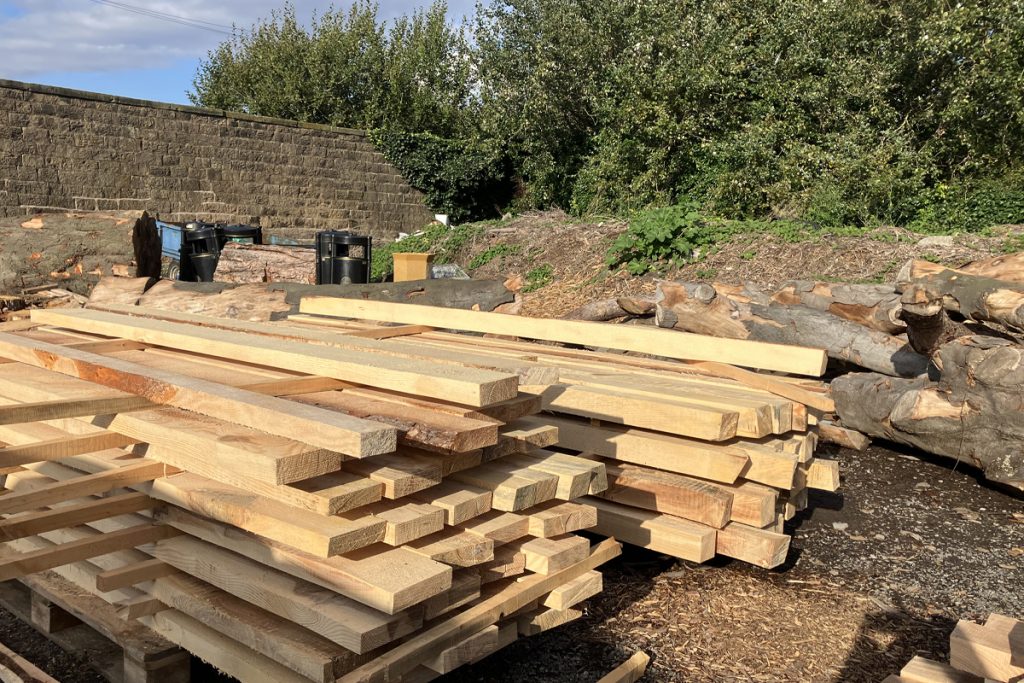
When a tree needs to be removed, the first thought is often how to dispose of it. But what if that tree could become something useful instead? Whether it’s a fallen tree following a storm, part of planned woodland management or a mature tree being removed for safety reasons, the timber left behind could have far more potential than you realise.
At Treecycle 2020, we believe that good timber deserves a second life. Through our portable sawmilling service, we help landowners, estate managers, farmers and homeowners turn suitable felled trees into usable timber for a wide range of projects.
Before you arrange for those logs to be chipped, burned or taken away, here are a few things worth considering.
1. Not every felled tree is waste
It’s easy to look at a large fallen tree and see a problem that needs clearing. But depending on the species, size and condition, that tree could provide valuable timber for building, landscaping, furniture making or other practical uses.
For example, suitable logs could be milled into:
- Boards and planks for woodworking projects
- Beams for suitable construction or landscaping applications
- Timber for fencing and gates
- Cladding for garden buildings and outbuildings
- Slabs for tables, benches and other furniture
- Timber for repairs and improvements around an estate
Even trees that aren’t suitable for high-value timber products may have other practical uses. The important thing is understanding what you’ve got before deciding what to do with it.
2. Different trees offer different possibilities
Not all timber is the same, and different species have different characteristics. Larch, for example, is a popular choice for outdoor projects thanks to its natural appearance and durability when appropriately specified and installed.
Oak is valued for its strength, distinctive grain and traditional appearance, making it suitable for a wide range of furniture, joinery and building applications. Other species can also produce beautiful and useful timber, depending on their condition and intended purpose.
The size of the log, its shape, any defects and how long it has been lying on the ground can all affect what can be recovered. That’s why it’s worth speaking to someone with sawmilling experience before assuming a tree has little value.
At Treecycle, Keith can help assess whether your logs are suitable for milling and discuss the options available.
3. Portable sawmilling brings the solution to you
One of the biggest challenges with processing felled trees is moving them. Large logs can be extremely heavy, awkward to handle and expensive to transport. Portable sawmilling offers a practical alternative. Rather than transporting logs to a traditional sawmill, Treecycle brings the sawmill directly to your location, subject to suitable access and working conditions. This allows timber to be processed on-site, reducing the need to move heavy logs over long distances.
It can be particularly useful for:
Estate owners: Making use of timber generated through ongoing tree and woodland management.
Farmers and landowners: Turning suitable fallen or felled trees into materials for future projects.
Homeowners: Retaining timber from a much-loved tree and using it to create something meaningful.
Parks and woodland managers: Finding practical ways to reuse timber within the same location.
The result is a more considered approach to managing timber, with opportunities to reduce waste and make better use of an existing resource.
4. Could your timber be used on the same property?
One of the biggest benefits of milling timber on-site is the opportunity to put it straight back to work. For landowners and estates, this could mean using timber from woodland management to create fencing, gates, benches, landscaping features or materials for future building projects.
For homeowners, it might mean turning a tree that has stood in the garden for decades into a table, bench or another piece that can be enjoyed for years to come.
There’s something particularly rewarding about knowing exactly where your timber came from. It also means you may be able to reduce the need to purchase new materials for certain projects. Of course, freshly milled timber often needs appropriate drying, storage or further processing before it is ready for its intended use. Structural applications may also require grading and specialist assessment. Planning ahead helps ensure the timber is milled and prepared with its future purpose in mind.
5. Think about the timber before the tree comes down
If you’re planning tree removal, it’s worth considering whether you want to retain the timber before work begins. How the tree is felled and the lengths into which it is cut can affect its suitability for milling.
Logs cut into short sections for firewood, for example, may no longer be suitable for longer boards or beams. If you know you would like to reuse the timber, speak to your tree surgeon and sawmilling specialist in advance.
A few useful questions to consider include:
- What species of tree is being removed?
- Is the timber healthy and in a suitable condition?
- What is the approximate diameter and length of the trunk?
- Is there suitable access for portable sawmilling equipment?
- Do you have a particular project in mind?
- Will you have somewhere suitable to store and dry the milled timber?
It’s also important to check whether any tree protection requirements, permissions or felling licences apply before work begins. Tree safety and removal should always be handled by appropriately qualified professionals.
Getting advice early can make a significant difference to the amount of usable timber recovered.
6. Making better use of locally grown timber
Sustainability is about more than simply planting new trees. It’s also about making better use of the resources we already have. When suitable timber is chipped, burned or disposed of unnecessarily, we may be missing an opportunity to create something useful and long-lasting.
By milling locally grown timber and finding practical uses for it, we can help reduce avoidable waste and, in some circumstances, the need for transportation and newly purchased materials.
For Treecycle, this has always been at the heart of the business. It’s about recognising the potential in a tree and helping customers make the most of it. Whether that means creating timber for a new building, producing materials for an estate or supplying wood for a one-off furniture project, every suitable log represents an opportunity.
Don’t let good timber go to waste
If you’ve got trees scheduled for removal, storm-damaged timber or logs already sitting on your land, it could be worth finding out whether they can be milled.
You don’t necessarily need to have a finished project in mind. Sometimes the first step is simply understanding what timber you have and what might be possible.
At Treecycle 2020, Keith works with landowners, estates, businesses and homeowners to turn suitable felled trees into usable timber through portable sawmilling and bespoke timber cutting.
Before you arrange for your timber to be removed, why not have a conversation?Whether you’re managing an estate, planning a building project or wondering what to do with a fallen tree, Keith is happy to discuss your requirements.
Call: 07712 880774
Email: keith@treecycle2020.co.uk
Website: www.treecycle2020.co.uk
Because sometimes, the end of a tree’s life is just the beginning of something new.